
ThriveRx Nutrition
Call or text Kate
(971) 235-2262
From Kate's kitchen

Recipes

Every recipe here is written in my own template, with my note on it: ingredients grouped the way a cook thinks, steps with the minutes on them, and swaps written down instead of left to luck.

Thirteen recipes stand here, each one a card: the name, what it serves, and its allergen flags, right on the front. Tap a card and the whole recipe opens where it stands. Or just scroll - the whole collection is on this one page.

Inside a recipe, tap one, two, four, or six portions and the page does the math - the method does not change. The versions are worked out ahead of time - vegetarian, vegan, pescatarian, sugar-free, low carb, low sugar, gluten-free, nut-free, dairy-free, egg-free - and where a version cannot honestly hold, the recipe says so instead of pretending. Every card names its allergens up front, and every entry says plainly what is in it as written.

I estimate the nutrition from the ingredients, the way a careful home cook would figure it, and I label it estimated every time it appears. These are estimates, not lab values.

Print one, and it comes out as a clean sheet for your kitchen - made to be printed, not just printable.

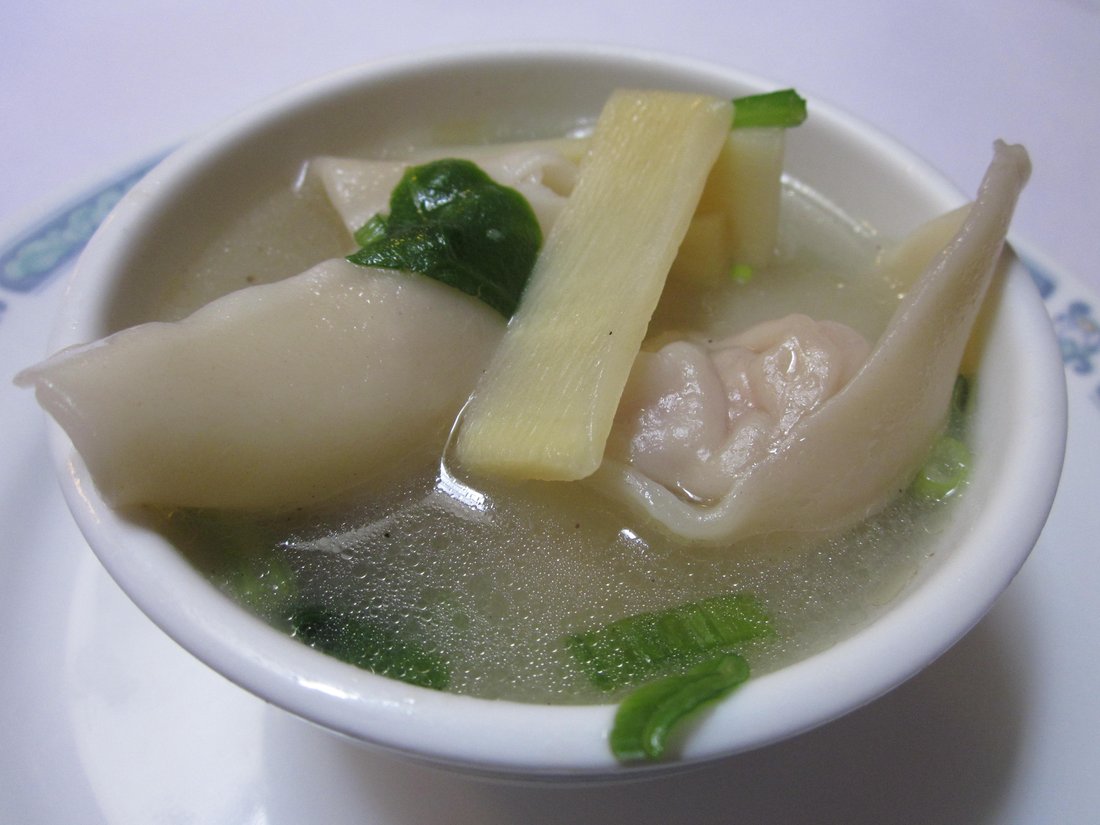
A bowl of wonton soup, photographed from above
A bowl of wonton soup.Photograph by BrokenSphere, Wikimedia Commons, shared under CC BY 3.0.
A finished entry · Entry No. 1

Ginger-Garlic Chicken Wonton Soup

A Chinese-inspired chicken wonton soup with shiitake mushrooms and bok choy - rich ginger-garlic broth, tender wontons, a sesame finish. Hearty, and on the table in about 30 minutes.

Serves 2Total time: about 30 minutesOne pot

Heads-up: This one has wheat and soy in it as written - and the gluten-free way to make it is right inside the recipe, so nobody has to sit this one out. The oyster sauce is shellfish.

Portions

Tap a number and the amounts in this recipe adjust.

Make it yours

Every version is worked out ahead of time, ready when you are.

The original

The soup just as it was made: rotisserie chicken, chicken broth, and wontons in a warm ginger-garlic broth.

Nothing swapped. Pick a version above and the ingredients adjust themselves.

Soup base

  • 4 cups chicken broth
  • 1 to 1 1/2 cups shredded rotisserie chicken Make or buy: Buy it ready, or poach 2 chicken breasts and shred.
  • 6 to 9 frozen wontons Make or buy: Frozen from the store works beautifully.
  • 2 baby bok choy, chopped
  • 3 to 4 shiitake mushrooms, thinly sliced
  • 2 green onions, whites and greens separated
  • 2 cloves garlic, minced
  • 3/4 tablespoon fresh ginger, grated
  • 1 1/2 teaspoons neutral oil

The flavor builders

  • 1 tablespoon soy sauce
  • 1 1/2 teaspoons oyster sauce
  • 1 teaspoon Shaoxing cooking wine or dry sherry (optional)
  • 1/2 teaspoon rice vinegar Black vinegar works here too, for a deeper flavor.
  • 1/2 teaspoon toasted sesame oil
  • 1/4 teaspoon white pepper
  • 1/4 teaspoon sugar
  • 1/4 teaspoon chili garlic sauce or chili crisp (optional) Make or buy: A jar of chili crisp from the store.
  • To taste salt
Build the aromatics - 3 minutes

Warm the oil in a large pot over medium heat. Cook the mushrooms about 3 minutes until lightly browned, then add the green onion whites, ginger, and garlic for 30 to 60 seconds, until fragrant.

Create the broth - 10 minutes

Pour in the broth; add soy sauce, oyster sauce, cooking wine, white pepper, and sugar. Simmer gently 10 minutes so the flavors settle in.

Add wontons and bok choy - 5 to 8 minutes

Drop the frozen wontons straight into the simmering broth and cook per the package, usually 5 to 8 minutes. Add bok choy stems in the last 3 to 4 minutes, leaves in the last 1 to 2.

Finish - 2 minutes

Stir in the chicken to warm through. Off the heat, add rice vinegar and sesame oil. Taste, adjust, ladle into bowls, and top with green onion greens and chili crisp if you like.

White pepper is the secret: it gives this kind of soup its warm, peppery depth. If you have it, do not skip it. And if you expect leftovers, cook only the wontons you will eat tonight. They go very soft sitting in broth overnight.

For 2As written.
For 4Every amount doubles. The page does the math; the method does not change.
For 6Every amount triples, same method.

Nutrition, per serving, estimated: calories about 410; protein about 34 g; carbs about 29 g; fat about 15 g; fiber about 3 g; sodium about 1,180 mg; sugar about 3 g, from the vegetables and broth. Also good for vitamin K and vitamin A from the bok choy, plus selenium and B vitamins from the chicken and shiitake. Estimated from the ingredients, the way a careful home cook would figure it. These are estimates, not lab values.

Tags: dinner, chicken, soup, weeknight, 30 minutes, family.

A finished entry · Entry No. 2

Sheet-Pan Salmon and Vegetables

Salmon night, without the fuss and without a sink full of pans. The fish, the potatoes, and the green beans all roast on one tray - the potatoes get a head start, the fish goes in last, and everything lands at the same time. This is the dinner I point to when someone tells me eating for their heart has to be plain and sad. It is neither.

Serves 2Total time: about 40 minutesOne pan

Heads-up: This one is fish, start to finish - there is no version without it. The stand-in tray is inside, labeled as its own dinner.

Portions

Tap a number and the amounts in this recipe adjust.

Make it yours

Every version is worked out ahead of time - and where a version cannot honestly hold, the panel says so instead.

The original

The tray just as written: fish, potatoes, beans, and onion under garlic, lemon, and olive oil.

Nothing swapped.

The tray

  • 2 salmon fillets, about 5 ounces each
  • 12 ounces baby potatoes, halved (quartered if large)
  • 8 ounces green beans, trimmed
  • 1/2 small red onion, cut in wedges

The seasoning

  • 1 tablespoon olive oil
  • 1/2 teaspoon garlic powder
  • 1 lemon
  • to taste salt and black pepper
Start the potatoes - 15 minutes.

Heat the oven to 425°F. Toss the potatoes with half the oil, half the garlic powder, salt, and pepper, and spread them on a rimmed sheet pan, cut side down where you can. Roast 15 minutes, until they are starting to soften at the edges.

Add the beans and onion - 5 minutes.

Toss the green beans and onion wedges with the rest of the oil and seasoning and add them to the pan. Back in for 5 minutes while you season the fish.

Nestle the salmon - about 12 minutes.

Pat the fillets dry, salt and pepper them, lay lemon slices over the top, and set them among the vegetables. Roast until the salmon flakes when you press it gently and the center is just turning opaque - about 12 minutes for a fillet an inch thick, a little less for a thin one.

Rest and serve - 3 minutes.

Let the pan sit while you set the table. A squeeze of the remaining lemon over everything, right at the end.

For 2As written.
For 4Every amount doubles. The portions above do the math; the method does not change.
For 6Every amount triples, same method.

Kate’s note

Frozen fillets are not a compromise - most "fresh" fish was frozen on the boat anyway. Thaw them overnight in the fridge, still wrapped, on a plate. And buy the fillets with the skin on if you can: the skin protects the fish from the pan's heat, and it lifts right off at the table for anyone who doesn't want it.

Vegetables, loaded or quiet. Loaded: a handful of cherry tomatoes and a sliced zucchini join the pan with the beans - they roast in the same time and give up their juices into the tray. Quiet: potatoes and fish only, with the beans steamed plain on the side for whoever likes them simple.

For picky eaters. Season one fillet with salt alone and keep its corner of the tray plain - the method doesn't mind. Potatoes are already separate, beans can stay crunchy and raw on the side with a little dip, and nobody has to negotiate with a sauce, because there isn't one.

Allergen flags: contains fish. This one is fish, start to finish - there is no version without it. The stand-in tray above is the vegetarian path, and it is a different dinner, labeled as one.

Condition notes (considerations, not promises - Kate verifies each against her own practice). Diabetic-friendly reading: about 26 g of carbs per serving as written, from the potatoes; the low-carb tray lands about 12 g. Celiac: naturally gluten-free as written - the strict standard is met by the ingredient list itself. Crohn's-friendly considerations: cook the vegetables soft rather than crisp-edged, skip the raw onion garnish idea entirely (there isn't one - the onion roasts), and know the fish itself is gentle; the fat is moderate.

Nutrition, per serving, estimated: calories about 520; protein about 38 g; carbs about 26 g; fat about 29 g; fiber about 5 g; sodium about 420 mg, with the salt measured as written - more if you salt freely at the table; sugar about 5 g, from the vegetables. Also good for omega-3 fats and vitamin D from the salmon, and potassium from the potatoes. Estimated from the ingredients, the way a careful home cook would figure it. These are estimates, not lab values.

Tags: dinner, salmon, sheet pan, weeknight, 40 minutes, family.

A finished entry · Entry No. 3

Lentil and Vegetable Soup

A pot of this soup is the cheapest insurance in my kitchen: it asks for almost nothing, it feeds whoever shows up, and it freezes like it was made for it. Brown or green lentils hold their shape, the vegetables go sweet in the broth, and a squeeze of lemon at the end wakes the whole pot up. This is also the soup I make when someone tells me their doctor has asked them to watch the salt - the flavor here is built on cumin, bay, and lemon, so the salt can stay small and still taste like dinner.

Serves 2Total time: about 50 minutesOne potFreezes well

Heads-up: No major allergens as written - check your broth label once; a few brands carry soy or wheat.

Portions

Tap a number and the amounts in this recipe adjust.

Make it yours

Every version is worked out ahead of time - and where a version cannot honestly hold, the panel says so instead.

The original

The pot just as written, on low-sodium chicken broth.

Nothing swapped.

The pot

  • 3/4 cup dry brown or green lentils, rinsed
  • 4 cups low-sodium chicken broth
  • 1 can (14.5 ounces) no-salt-added diced tomatoes, with their juices
  • 1 small onion, diced
  • 2 carrots, sliced in coins
  • 2 stalks celery, sliced
  • 2 cloves garlic, minced
  • 2 teaspoons olive oil
  • 1 teaspoon ground cumin
  • 1 bay leaf
  • 1 tablespoon lemon juice
  • 2 handfuls fresh spinach, a handful per serving
  • 1/4 teaspoon, then to taste salt
Soften the vegetables - 6 minutes.

Warm the oil in a large pot over medium heat. Cook the onion, carrots, and celery until the onion softens, about 5 minutes, then the garlic for 30 seconds, until it smells like dinner.

Lentils, broth, and tomatoes - 30 minutes.

Add the lentils, broth, tomatoes with their juices, cumin, and bay leaf. Bring to a boil, then turn it down to a gentle simmer, lid ajar, for 25 to 30 minutes, until the lentils are tender but still holding their shape. Brown and green lentils keep their bite; red lentils melt into the pot - save those for a creamy soup.

Finish - 5 minutes.

Fish out the bay leaves. Stir in the spinach until it wilts, the lemon juice, and the measured salt. Taste, and add salt a pinch at a time if your pot needs it - the lemon will ask for less salt than you expect.

For 2As written.
For 4Every amount doubles. The portions above do the math; the method does not change.
For 6Every amount triples, same method.

Kate’s note

Freeze this one flat, in quart bags, and it will thaw in a bowl of warm water faster than takeout arrives. It thickens as it sits - that is the lentils still drinking - so loosen a reheated bowl with a splash of water or broth and it comes right back. Hold the lemon until serving when you can; it keeps its brightness that way, and a frozen portion reheated with a fresh squeeze tastes like you made it today.

Vegetables, loaded or quiet. Loaded: a diced zucchini and a second handful of spinach per serving go in at the finish, or a diced potato with the lentils (it adds about 8 g of carbs per serving - counted, not hidden). Quiet: carrots only, and blend the pot smooth - the lentils disappear into a silky tomato soup that has fooled more than one suspicious eater.

For picky eaters. The blended, quiet build is the picky path: smooth, red, and familiar, with a grilled cheese for dipping. Nothing green shows. Nothing needs picking out, because there is nothing to pick.

The salt, handled plainly (for her CHF readers). Built as written - low-sodium broth, no-salt-added tomatoes, the measured salt above added at the end - a serving lands at about 330 mg of sodium. Built with regular broth and regular canned tomatoes, the same pot lands around 700 mg. Both numbers are printed because the difference is the whole point: the flavor is carried by cumin, bay, tomato, and lemon, so the low-sodium pot does not taste like a compromise.

Allergen flags: none of the major allergens as written. Broth labels vary - a few brands carry soy or wheat - so the flag on any given pot is only as good as the broth you poured. Check yours once.

Condition notes (considerations, not promises - Kate verifies each). Diabetic-friendly reading: about 45 g of carbs per serving, but 12 g of it is fiber, and lentils are famously slow to digest - the count is printed so each reader can place the bowl in their own plan. Celiac: gluten-free as written, held to the strict standard - the only watch-point is the broth label. Crohn's-friendly considerations: lentils are a high-fiber food, full stop, and this draft will not pretend otherwise; the gentler consideration is the blended red-lentil build - red lentils dissolve, the soup is smooth, and many readers find it kinder. Kate verifies and words this herself before it ever carries her name.

Nutrition, per serving, estimated: calories about 290; protein about 13 g; carbs about 45 g; fat about 6 g; fiber about 12 g; sodium about 330 mg in the low-sodium build (about 700 mg with regular broth and tomatoes); sugar about 7 g, from the vegetables and tomatoes. Also good for iron and folate from the lentils, and vitamin A from the carrots. Estimated from the ingredients, the way a careful home cook would figure it. These are estimates, not lab values.

Tags: dinner, soup, lentils, batch cooking, one pot, low sodium, freezer.

A finished entry · Entry No. 4

Pull-Apart Breakfast Cups

This is Steven's method, and it is a good one: cut the biscuits up, toss the pieces with everything - bacon, cheese, whatever add-ins your morning wants - bind the bowl with egg or with cream, spoon it into muffin tins, and bake. What comes out pulls apart like monkey bread and eats like a strata, and every cup is its own serving, which means a pan of these on a Sunday is breakfast handled until Wednesday. A serving is three cups, with fruit on the side.

The base ratio - the part that must stay fixed. For every 4 biscuits: 2 eggs, beaten, OR 1/3 cup heavy cream, and about 1 1/4 cups of add-ins (bacon, cheese, and vegetables together). Fill each cup to the top with pieces mounded just slightly - the cups puff as they bake, and a measured binder is what keeps them from overflowing. Everything inside those numbers is free. Everything about the numbers is not.

The fork, stated plainly. The egg version sets like a strata: the cups hold their shape, slice clean, reheat firm, and freeze well. The cream version is richer and softer: it never quite sets, it pulls apart gooey the way monkey bread does, and there is no egg flavor in it at all - it is the biscuit-and-cream build, best eaten fresh or reheated gently from the fridge. Neither is the healthy one pretending to be the other. Pick by morning.

Serves 2Makes 6 cupsTotal time: about 35 minutesMuffin tin

Heads-up: This one has wheat and milk as written - the gluten-free dough build is inside. The egg-bound batch carries egg; the cream-bound batch does not, and the flag travels with the pan.

Portions

Tap a number and the amounts in this recipe adjust.

Make it yours

Every version is worked out ahead of time - and where a version cannot honestly hold, the panel says so instead.

The original

Bacon and cheddar, egg-bound, green onions through it.

Nothing swapped.

The bowl (base, Serves 2 - 6 cups)

  • 4 refrigerated biscuits, cut in quarters (from a 16.3-ounce can of 8)
  • 3 slices bacon, cooked crisp and crumbled
  • 1/2 cup cheddar, shredded
  • 2 green onions, sliced
  • 2 binder, egg path: eggs, beaten with a pinch of salt and pepper
  • 1/3 cup binder, cream path: heavy cream
  • a little butter or cooking spray, for the tin

Make it yours - the add-in lineup (inside the 1 1/4-cup measure, any direction you like): diced bell pepper · mushrooms, sautéed dry so they don't weep · a handful of spinach, wilted and squeezed · diced ham off the bone · cooked breakfast sausage, crumbled · pepper jack in the cheddar's place · Swiss with the ham · a spoon of last night's roasted vegetables, chopped small. Steven's rule for this one is however you want - the ratio holds the cup together while the add-ins wander.

Cook the bacon - 8 minutes.

Crisp it in a skillet, drain it on paper, crumble it. (Last night's leftover bacon works, and so does the oven sheet-pan method if you're already in there.)

Cut and toss - 5 minutes.

Cut each biscuit into quarters - six pieces for the biggest bakery-style biscuits. Into a big bowl with the bacon, cheddar, green onions, and whatever add-ins your morning picked. Toss with your hands until the cheese is everywhere.

Bind and fill - 3 minutes.

Pour the beaten eggs or the cream over the bowl and toss once more, just until every piece is coated. Spoon into the greased tin, filling each cup to the top, pieces mounded slightly.

Bake - 18 to 22 minutes at 350°F.

Until the tops are deep golden and the centers are set - the egg version should not jiggle, and if you temp it, 160°F. The cream version stays softer in the middle; judge it by the golden top and the set edges.

Rest - 5 minutes.

They finish setting, shrink a breath from the tin's sides, and pop out clean with a spoon run around the edge.

For 2As written.
For 4Every amount doubles. The portions above do the math; the method does not change.
For 6Every amount triples, same method.

Kate’s note

Make them ahead without apology - that is what they're for. The egg cups keep three days in the fridge and a month in the freezer, and they reheat like fresh: 45 to 60 seconds in the microwave, or 8 to 10 minutes in a 350°F oven if you want the edges crisp again. The cream cups are best the day they're baked and reheat gently from the fridge - the freezer makes them weep a little. Cool any batch completely on a rack before it goes in a container, so the bottoms stay crisp instead of steaming themselves soft.

Vegetables, loaded or quiet. Loaded: pepper, mushrooms, and spinach all in the toss. Quiet: bacon and cheese only, with the green onions sprinkled on the grown-up cups at the table.

For picky eaters. The tin is the trick - one batch, two tosses. Split the bowl before the bacon and vegetables go in: plain cheese cups in one half of the tin, everything cups in the other. Nobody picks around anything, and the plain cups look exactly like the loaded ones from across the table.

Allergen flags: contains wheat, milk; contains egg in the egg-bound batch. The flag travels with the batch, not the recipe - a cream-bound pan is egg-free, and the card should say which pan is which. This one has wheat and milk in every cup as written - the gluten-free dough swap is inside.

Condition notes (considerations, not promises - Kate verifies each). Diabetic-friendly reading: about 33 g of carbs per three-cup serving, printed plainly; fruit on the side, not juice. Celiac: the gluten-free build above, with the clean-tin standard. Crohn's-friendly considerations: this is a rich cup - a two-cup portion with fruit is the gentler seat, and Kate will word it her way.

Nutrition, per serving (3 cups), estimated. Egg-bound: calories about 455; protein about 20 g; carbs about 33 g; fat about 27 g; fiber about 1 g; sodium about 940 mg - biscuit dough and bacon are salty foods, and this panel won't pretend otherwise; lower-sodium bacon brings it down some; sugar about 3 g, from the dough. Cream-bound: calories about 525; protein about 15 g; fat about 34 g; carbs and sodium about the same. Estimated from the ingredients, the way a careful home cook would figure it. These are estimates, not lab values.

Tags: breakfast, bacon, eggs, muffin tin, make-ahead, family.

A finished entry · Entry No. 5

Overnight French Toast Bake

Attribution, stated plainly: Kate has a real version of this bake - she just made one, this week, in her own kitchen. This draft holds the place here, built from standard practice, so the entry exists to be replaced. The moment Kate shares hers, hers supersedes this draft word for word, and this page becomes hers.

This is the sweet sibling of the breakfast cups - the same family (bread, a binder, a pan, a wait) wearing cinnamon instead of bacon. You build it after dinner, when the kitchen is already warm: cubes of bread, a custard poured over, fruit if the counter offers any, and the whole dish into the fridge. In the morning the oven does the work while the coffee brews, and the house smells like a holiday on an ordinary Tuesday. Steven calls it monkey bread's cousin; he's not wrong - it pulls apart the same way, soft in the middle, golden at the edges.

Serves 2Assembled the night beforeAbout 15 minutes tonight + 35 minutes in the morningA small baking dish

Heads-up: This one has wheat, egg, and milk as written - the gluten-free bread build is inside.

Portions

Tap a number and the amounts in this recipe adjust.

Make it yours

Every version is worked out ahead of time - and where a version cannot honestly hold, the panel says so instead.

The original

As written: maple in the custard, fruit folded through, morning bake.

Nothing swapped.

The dish (base, Serves 2)

  • 5 cups bread cubes, 1-inch, from brioche, challah, or a soft white loaf - day-old is best
  • 3 eggs
  • 3/4 cup milk
  • 1/4 cup heavy cream (or use all milk - the center bakes a little less rich, and still lovely)
  • 2 tablespoons maple syrup
  • 1 teaspoon vanilla
  • 1 teaspoon ground cinnamon
  • a pinch salt
  • 1 cup fruit - whatever is on hand: berries, a sliced apple or pear, sliced peaches
  • a little butter, for the dish

The dish by portions - depth is what sets the bake: For 1, a 2-cup ramekin or small dish, 25–30 minutes. For 2, a loaf pan or 1-quart dish, 30–35 minutes. For 4, an 8×8-inch pan, 35–40 minutes. For 6, a 9×13-inch pan, 45–50 minutes, covered with foil for the first 25 so the center sets before the top browns.

The cinnamon-roll build (Steven's variation, and a good one). Standard cinnamon rolls - from a can of five, or the bakery's - each cut in quarters, take the bread's place: 1 roll for one, 3 for two, 6 for four, 9 for six. Cut the maple in the custard in half; the rolls bring their own sweetness with them. Save the little tub of icing, warm it ten seconds, and drizzle it at the table.

The bacon add-in. Two slices of bacon, cooked crisp and crumbled over the top for the last 10 minutes of the bake - or served alongside, still warm. Sweet and salty in the same bite is an old diner truth, and it holds here.

Tonight - cube and fill, 5 minutes.

Butter the dish well, corners included. Cube the bread (or quarter the cinnamon rolls) and tumble it in, with the fruit folded through.

Tonight - whisk and pour, 3 minutes.

Whisk eggs, milk, cream, maple, vanilla, cinnamon, and salt until smooth. Pour slowly over the bread, then press every cube down gently with the back of a spoon - you want each piece drinking, no dry pockets left on top.

Tonight - cover and chill.

Foil or a lid, into the fridge for at least 4 hours, overnight best. This soak is the recipe. A rushed one bakes up bready in the middle; a rested one bakes up like custard.

Morning - sit out and heat, 20 minutes.

The dish sits on the counter while the oven heats to 350°F, so the bake starts from cool, not cold.

Morning - bake, by your dish's depth (see the table above).

Until the top is puffed and golden and the center is set - a knife slipped into the middle comes out clean of liquid custard, and if you temp it, 160°F. Scatter the bacon crumble on for the last 10 minutes if it's coming.

Rest - 10 minutes.

It settles as it stands, slices clean instead of slumping, and goes to the table in the dish it baked in.

For 2As written.
For 4Every amount doubles. The portions above do the math; the method does not change.
For 6Every amount triples, same method.

Kate’s note

Day-old bread is not a flaw in this recipe; it is the recipe. A fresh, soft loaf drinks too fast and bakes up soggy in the middle - a loaf that sat a day holds its shape and drinks evenly. If your loaf is fresh, cube it and leave the cubes on a tray on the counter for an hour while you make dinner. They'll be ready when you are. And the relation to the breakfast cups, for anyone keeping the family straight: same family, two pans - the cups are the savory branch, portioned in a tin; this is the sweet branch, soaked in a dish. A weekend can hold both.

Fruit, loaded or quiet. Loaded: fruit through the custard and a handful scattered over the top for the last stretch of the bake. Quiet: plain cinnamon through and through, fruit warmed and served on top at the table - the picky-eater build, and nobody's lesser for it.

Allergen flags: contains wheat, egg, milk. The cinnamon-roll build: canned doughs often carry soy as well - the flag on that pan should say so, from the can's own label. This one has wheat as written - the gluten-free bread build is inside.

Condition notes (considerations, not promises - Kate verifies each). Diabetic-friendly reading: the low-sugar build above is the diabetic-friendly seat - about 9 g of sugar, about 46 g of carbs, printed plainly so each reader can place it in their morning. Celiac: the gluten-free build, held to the strict standard as written. Crohn's-friendly considerations: a soft, well-cooked, gentle dish as written; rich at the cream measure - the all-milk build is the lighter seat.

Nutrition, per serving, estimated: calories about 430; protein about 13 g; carbs about 50 g; fat about 18 g; fiber about 2 g; sodium about 350 mg; sugar about 17 g, from the maple and the fruit. Low-sugar build: sugar about 9 g, carbs about 46 g, calories about 395. Also good for calcium from the milk, and whatever the fruit brings - vitamin C from berries, fiber from a pear. Estimated from the ingredients, the way a careful home cook would figure it. These are estimates, not lab values.

Tags: breakfast, make-ahead, overnight, French toast, family, holiday morning.

A finished entry · Entry No. 6

A Tray of Sliders

The easiest lunch I know for more than two people, and it scales in both directions without breaking a sweat: a sheet of rolls, sliced once as a sheet - never separated - layered with filling, the tops set back on like a lid, a butter glaze brushed over, and the whole tray baked until the cheese gives up and melts. It feeds a team after a game, it feeds a family on a Friday, and cut down to half a sheet it feeds two people at a kitchen counter with soup. Figure two sliders a person for a lunch with something on the side, three to four a person when the tray is the main event, and one or two alongside a pot of soup.

Serves 2 (6 sliders)Total time: about 30 minutesOne tray

Heads-up: This one has wheat and milk as written - the gluten-free roll build is inside. The glaze’s Worcestershire sauce carries fish (anchovy) and often soy; it is named here because it hides there.

Portions

Tap a number and the amounts in this recipe adjust.

Make it yours

Every version is worked out ahead of time - and where a version cannot honestly hold, the panel says so instead.

The original

Ham and Swiss under the Dijon glaze.

Nothing swapped.

The classic build - ham and Swiss (base, Serves 2 - 6 sliders)

  • 6 rolls connected dinner rolls, one sheet (a 12-count pack, cut to size)
  • 6 ounces sliced ham
  • 3 Swiss cheese slices
  • 4 tablespoons butter, melted, for the glaze
  • 2 teaspoons, heaped Dijon mustard, for the glaze
  • 1 1/2 teaspoons Worcestershire sauce, for the glaze
  • 1 1/2 teaspoons poppy seeds (optional), for the glaze
  • 1/4 teaspoon onion powder, for the glaze
  • a little mayonnaise or extra Dijon, a thin spread for the cut side
  • Turkey. 6 ounces sliced turkey and 3 slices provolone or Swiss, with a thin smear of cranberry sauce under the cheese if the holidays left you any. Leftover roast turkey, sliced, is even better.
  • Meatball. 6 frozen meatballs, thawed and halved, 1/2 cup marinara spooned over, 3 slices mozzarella. Give this tray 5 extra minutes under the foil - the sauce has to heat through.
  • Vegetable. Roasted pepper strips and zucchini (or portobello strips), 3 slices provolone, and a smear of pesto - nut flag: pesto often carries pine nuts or walnuts; a nut-free pesto, or the plain Dijon spread, keeps this tray nut-free.
Slice the sheet - 3 minutes.

With a long serrated knife, slice the whole sheet of rolls in half horizontally, tops as one lid, bottoms as one slab. Do not pull the rolls apart - the sheet is the whole trick. Set the bottom slab in a greased or lined tray or 9×13 dish.

Layer - 5 minutes.

A thin spread of mayo or Dijon on the cut side (this is a raincoat for the bottom rolls - it keeps the filling's juices from soaking through). Then the ham, the cheese laid edge to edge, and the top slab back on like a lid.

Glaze and rest - 10 minutes.

Whisk the melted butter, Dijon, Worcestershire, poppy seeds, and onion powder; brush it over the tops, getting the edges. Then let the tray sit 10 minutes before the oven - a rested glaze bakes onto the crust instead of soaking straight through it. (Assembling ahead? Everything except the glaze can wait in the fridge, covered, up to a day. Glaze at bake time.)

Bake - covered 12 to 15 minutes, uncovered 5, at 350°F.

Foil on until the cheese is melted through, then off until the tops are golden and glossy. The meatball tray takes the longer end.

Rest and cut - 3 minutes.

Rest the tray a few minutes so the cheese settles, then cut along the rolls' own seams and serve warm.

For 2As written.
For 4Every amount doubles. The portions above do the math; the method does not change.
For 6Every amount triples, same method.

Kate’s note

Run the tray half-and-half. The sheet doesn't care if the left half is ham and Swiss and the right half is plain cheese for the kid who wants plain cheese - mark that half with a toothpick so it survives the trip to the table. One pan, two audiences, nobody picking around anything. That is most of what feeding a family actually is.

Vegetables, loaded or quiet. Loaded: pepper strips and a thin layer of spinach inside any family. Quiet: fillings plain as written, with pickles and a tray of raw vegetables on the side, where they belong to whoever reaches for them.

Allergen flags: contains wheat, milk. The glaze's Worcestershire sauce carries fish (anchovy) and often soy - it is named here because it hides there. Meatball family: many frozen meatballs carry wheat and soy inside - the bag's label is the flag. This one has wheat as written - the gluten-free roll build is inside.

Condition notes (considerations, not promises - Kate verifies each). Diabetic-friendly reading: the carb count is printed per slider below; one or two beside a salad is the workable seat. Celiac: the gluten-free build with the clean-pan standard. Crohn's-friendly considerations: a rich tray; the turkey family at one or two sliders is the gentler build, and the glaze can be brushed light.

Nutrition, per slider (ham and Swiss), estimated: calories about 230; protein about 9 g; carbs about 15 g; fat about 14 g; fiber about 0 g; sodium about 410 mg - ham is a salty food, and lower-sodium ham brings this down in a way that matters; sugar about 3 g, from the roll. Per two-slider serving: about 460 calories, sodium about 820 mg. Estimated from the ingredients, the way a careful home cook would figure it. These are estimates, not lab values.

Tags: lunch, sliders, tray, crowd, game day, family, make-ahead.

A finished entry · Entry No. 7

Freezer-Door Fried Rice

The pantry entry, and the rule is strict: nothing in this pan asks you to go to the store. Rice from the shelf or last night, eggs, a bag of frozen vegetables, soy sauce - and the protein is the freezer's own: frozen chicken nuggets, crisped and chopped. That is not a shortcut to apologize for. A nugget is seasoned, cooked chicken with a crust that stays crisp if you keep it out of the steam - crisp it, chop it, and lay it over the rice at the very end, and it eats like the crispy chicken off a good takeout tray, on a night when takeout wasn't happening.

Serves 2Total time: about 25 minutesOne panNo store run

Heads-up: This one has wheat, egg, and soy as written - the gluten-free build (tamari and labeled gluten-free nuggets) is inside.

Portions

Tap a number and the amounts in this recipe adjust.

Make it yours

Every version is worked out ahead of time - and where a version cannot honestly hold, the panel says so instead.

The original

Nuggets, eggs, peas and carrots, soy at the edge of the pan.

Nothing swapped.

The pan (base, Serves 2)

  • 2 cups cooked rice, cold (leftover, a shelf-stable pouch, or fresh-cooked and spread to dry 10 minutes)
  • 8 frozen chicken nuggets
  • 1 cup frozen peas and carrots
  • 2 eggs
  • 2 tablespoons soy sauce (low-sodium if that's the bottle you have)
  • 1 tablespoon neutral oil
  • 1/2 teaspoon garlic powder
  • optional green onion, sliced, if the fridge offers one

Shortcut proteins - the freezer and fridge speak several languages (Steven's axis, and a useful one): rotisserie chicken, chopped, about 1 1/2 cups in the nuggets' place (no crisping - warm it through on top at the end so it doesn't dry); frozen chicken strips, crisped and sliced exactly like the nuggets; a can of tuna, drained, folded in off the heat with a squeeze of lemon if there is one - a different dinner, and an honest one.

Crisp the nuggets - 10 to 12 minutes.

Oven or air fryer, per the bag. Chop each nugget in halves and set them aside, out of the steam. This is the whole trick: crisp last, sauced never.

Scramble the eggs - 2 minutes.

A film of oil, a hot pan, the beaten eggs pulled soft with the garlic powder. Out onto a plate while they're still a little glossy - they finish in the rice.

Fry the rice - 5 minutes.

The rest of the oil, the rice spread flat, and one full minute undisturbed so the bottom grains crisp at the edges. The frozen vegetables go in on top, 3 to 4 minutes until hot through. Pour the soy sauce around the pan's hot edge, not over the rice - it sizzles and seasons instead of soaking.

Fold and finish - 2 minutes.

The eggs folded back in, the green onion if there is one, and the nuggets laid over the top in the pan or on each bowl. Serve from the pan.

For 2As written.
For 4Every amount doubles. The portions above do the math; the method does not change.
For 6Every amount triples, same method.

Kate’s note

Fresh rice fights this recipe - it's too wet to crisp. Three honest fixes: last night's rice is best; a shelf-stable pouch is made for this; or spread fresh-cooked rice on a tray for 10 minutes and let the steam leave. And know that this pan is a template wearing a name: any frozen vegetable, any cooked protein, the same order of operations. On a night when the fridge looks empty, it usually isn't. It's this.

Vegetables, loaded or quiet. Loaded: double the peas and carrots and add frozen corn, spinach, or edamame - whatever the freezer door holds. Quiet: peas only, or the vegetables crisped in their own corner of the pan and served beside the rice, not in it.

For picky eaters. This recipe was practically designed for them: the nuggets sit on top, whole if they prefer (skip the chopping), the rice underneath is plain but for the soy, and the peas are a side, not a trap. Deconstruction isn't a compromise here; it's the plating.

Allergen flags: contains wheat (the nuggets' breading, and soy sauce), egg, soy. All three are named because all three hide - the nuggets read as "chicken" and the soy sauce reads as "sauce." This one has wheat as written - the gluten-free build (tamari + labeled nuggets) is inside.

Condition notes (considerations, not promises - Kate verifies each). Diabetic-friendly reading: about 54 g of carbs as written; the cauliflower-rice build lands about 22 g, printed above in its own words. Celiac: the gluten-free build with the strict tamari standard. Crohn's-friendly considerations: the cauliflower build raises the cruciferous load - the quieter consideration is white rice, vegetables cooked soft, and the nuggets' crust is fried food; Kate words it for her readers.

Nutrition, per serving, estimated: calories about 530; protein about 21 g; carbs about 54 g; fat about 24 g; fiber about 4 g; sodium about 950 mg with regular soy sauce (about 720 mg with low-sodium soy - the nuggets bring their own salt either way, and this panel says so); sugar about 5 g, from the vegetables and breading. Estimated from the ingredients, the way a careful home cook would figure it. These are estimates, not lab values.

Tags: dinner, pantry, freezer, fried rice, weeknight, 25 minutes, family.

A finished entry · Entry No. 8

Rotisserie Chicken and Lemon Orzo

The minimal-store entry, and its shopping list is the recipe's whole boast: a rotisserie chicken, a head of broccoli, a lemon, and a bunch of green onions. Everything else - orzo, broth, garlic, olive oil, a heel of parmesan - is pantry, the things a kitchen keeps. The chicken arrives cooked and seasoned; your job is one pan of lemony orzo with broccoli steamed right in it, the chicken warmed through at the end, and dinner in about 25 minutes that tastes like you planned it yesterday. The wonton soup runs on this same shortcut, and so does half of good weeknight cooking. No apology comes with it.

Serves 2Total time: about 25 minutesOne panStore list: four things

Heads-up: This one has wheat and milk as written - the gluten-free build is inside. Rotisserie chickens vary: a few are injected with solutions that carry soy, and the store’s label says so.

Portions

Tap a number and the amounts in this recipe adjust.

Make it yours

Every version is worked out ahead of time - and where a version cannot honestly hold, the panel says so instead.

The original

The pan just as written.

Nothing swapped.

The pan (base, Serves 2)

  • 2 cups rotisserie chicken, shredded (about half a chicken - the rest is tomorrow's lunch)
  • 1 cup orzo, dry
  • 1 1/2 cups low-sodium chicken broth
  • 2 cups broccoli florets, cut small
  • 1 lemon, zested and juiced
  • 2 green onions, sliced
  • 1 clove garlic, minced
  • 1 tablespoon olive oil
  • 1/4 cup parmesan, grated
Toast the orzo - 2 minutes.

Olive oil in a wide pan over medium heat, the garlic for 30 seconds, then the dry orzo, stirred until the grains turn golden at the edges. This is where the nutty flavor comes from, and it takes two minutes to earn it.

Simmer - 8 minutes.

The broth in, a stir, the lid ajar, at a gentle simmer until the orzo is nearly tender. It will look soupy partway through; it drinks as it goes.

Broccoli in - 4 minutes.

The florets laid on top to steam in the pan's own heat, then stirred through until bright green and just tender.

Chicken, lemon, cheese - 3 minutes.

The shredded chicken folded in to warm through. Off the heat: the lemon zest, the lemon juice, the green onions, and the parmesan. Lemon last, always - boiled lemon goes dull, and fresh lemon is the point of the dish.

For 2As written.
For 4Every amount doubles. The portions above do the math; the method does not change.
For 6Every amount triples, same method.

Kate’s note

Buy the chicken last on your way home, still warm, and this is a 25-minute dinner. Buy it Sunday and it's a 25-minute Wednesday dinner - the cooked chicken keeps three to four days in the fridge, and the bones, if you have ten more minutes someday, make the broth for the next pot of soup. One chicken, three jobs. That is not a shortcut; that is cooking.

Vegetables, loaded or quiet. Loaded: a handful of spinach folded in with the chicken (it wilts in the pan's heat) and frozen peas in with the broccoli. Quiet: the broccoli steamed in its own little pot and served beside the pan, for whoever wants their green on the side.

For picky eaters. The pan is sequenced for them: scoop the plain chicken-and-orzo portions after step two - before the broccoli and lemon go in for everyone else. One pan, no second dinner, and the plain bowl doesn't look like the odd one out.

Allergen flags: contains wheat (the orzo), milk (the parmesan). One label note in Kate's check-the-label manner: rotisserie chickens vary - a few are injected with solutions that carry soy. If soy matters in your house, the store's label says so. This one has wheat as written - the gluten-free build is inside.

Condition notes (considerations, not promises - Kate verifies each). Diabetic-friendly reading: about 46 g of carbs as written; the half-orzo build lands about 26 g. Celiac: the gluten-free build above - and the chicken's own label checked, per the flag. Crohn's-friendly considerations: everything in the pan is cooked soft; the broccoli can go a minute longer for tenderness, and the lemon can be halved if citrus bothers.

Nutrition, per serving, estimated: calories about 515; protein about 35 g; carbs about 46 g; fat about 19 g; fiber about 4 g; sodium about 470 mg - no salt is added as written; the chicken brings its own seasoning with it, and this panel counts it; sugar about 3 g, from the broccoli and lemon. Also good for vitamin C from the broccoli and lemon. Estimated from the ingredients, the way a careful home cook would figure it. These are estimates, not lab values.

Tags: dinner, rotisserie chicken, orzo, one pan, weeknight, 25 minutes.

A finished entry · Entry No. 9

Fruit "Ice Cream"

Quotation marks on the name, kept honest: this is frozen fruit blended with a little cream until it stands up like soft-serve, and it eats like ice cream at the table. Banana makes it creamy, berries make it bright, mango makes it taste like a vacation. There is no added sugar in the base recipe at all - the sweetness is the fruit's, and for a lot of readers that is the whole headline.

Serves 2Total time: about 5 minutes, plus the fruit's time in the freezerA blender or food processor

Heads-up: This one has milk as written - the coconut-cream build is inside, with its label caution written out.

Portions

Tap a number and the amounts in this recipe adjust.

Make it yours

Every version is worked out ahead of time - and where a version cannot honestly hold, the panel says so instead.

The original

Banana and berries, the cream, no added sweetener unless your fruit asks for it.

  • 2 cups frozen fruit - banana slices with berries, or mango, or peaches (frozen solid, at least 4 hours)
  • 1/4 cup heavy cream
  • 1 teaspoon honey or maple syrup (optional - ripe fruit often needs none)
  • 1/4 teaspoon vanilla (optional)
  • a pinch salt
Freeze the fruit - ahead of time.

Slice bananas before freezing; freeze everything in a single layer on a tray so the pieces stay separate, then bag. Rock-hard is right.

Blend - 3 to 4 minutes.

Fruit and cream into the processor. It will look wrong before it looks right: crumbs, then a ball, then suddenly soft-serve. Stop and scrape twice. A splash more cream, a tablespoon at a time, only if the machine is struggling.

Serve now, or almost.

Soft-serve straight from the bowl is the best texture this recipe ever has. Thirty minutes in the freezer firms it to scoopable; overnight makes it a brick that needs 15 minutes on the counter to come back. Plan on soft.

For 2As written.
For 4Every amount doubles. The portions above do the math; the method does not change.
For 6Every amount triples, same method.

Kate’s note

The freezer bananas nobody wanted - the spotted ones - are this recipe's first choice, not its compromise. Peel them before you freeze them. Future you, on a Tuesday, will be so glad present you did.

Allergen flags: contains milk (the cream). The vegan build swaps the milk for coconut cream, and carries the coconut caution written above.

Condition notes (considerations, not promises - Kate verifies each). Diabetic-friendly reading: the flagship line above - no added sugar, fruit's own counted. Celiac: naturally gluten-free, strict standard met as written. Crohn's-friendly considerations: smooth and cold and gentle; very cold food bothers some readers - a serving that sits five minutes takes the edge off.

Nutrition, per serving (about 3/4 cup), estimated: calories about 150; protein about 2 g; carbs about 22 g; fat about 6 g; fiber about 3 g; sodium about 15 mg; sugar about 15 g, all of it the fruit's own - none added in the base recipe. Estimated from the ingredients, the way a careful home cook would figure it. These are estimates, not lab values.

Tags: dessert, fruit, no added sugar, blender, 5 minutes.

A finished entry · Entry No. 10

Whipped-Cream Pops

Steven's mother's-house method, and it deserves its place in writing: whip cream, dollop it onto wax paper in spoonfuls, stand a toothpick in each dollop for a stick, press on sprinkles or crushed candy, and freeze the whole sheet. What comes out is a pop you peel off the paper and eat in four bites - no molds, no sticks to buy, no equipment a kitchen doesn't already have. They melt fast. Small is not the limitation here; small is the design.

Serves 2Makes 4 popsTotal time: about 10 minutes, plus 2 hours in the freezerWax paper and toothpicks

Heads-up: This one has milk as written. Crushed candy-coated chocolate warns for peanut and tree nut on its own package - the card says so rather than assuming.

Portions

Tap a number and the amounts in this recipe adjust.

Make it yours

Every version is worked out ahead of time - and where a version cannot honestly hold, the panel says so instead.

The original

Real whipped cream, a spoon of sugar, sprinkles.

  • 1/2 cup heavy cream
  • 1 tablespoon sugar
  • 1/2 teaspoon vanilla
  • about 2 tablespoons toppings - sprinkles, crushed M&M's, crushed candy cane at the holidays, mini chips
Whip - 3 minutes.

Cold cream, cold bowl if your kitchen runs warm. Whip to stiff peaks - soft peaks make a dollop that slumps in the freezer; stiff peaks hold their swirl.

Dollop and dress - 5 minutes.

Heaped tablespoons onto a wax-paper-lined tray that fits your freezer flat. A toothpick standing in each. Toppings pressed on now, while the cream is soft enough to hold them.

Freeze - at least 2 hours.

Peel off the paper, eat over the sink or outside like you mean it. They keep a week in a container, layers separated with the same wax paper, and they will not survive a warm car ride home from anywhere.

For 2As written.
For 4Every amount doubles. The portions above do the math; the method does not change.
For 6Every amount triples, same method.

Kate’s note

Make these with the kids, not for them. The dolloping is the activity, the freezing is the patience lesson, and a pop with too many sprinkles is not a mistake anyone has ever made. For a birthday, a tray of these with three bowls of toppings is a party that costs about four dollars.

Allergen flags: contains milk. Toppings carry their own labels and their own flags - crushed candy-coated chocolate warns for peanut and tree nut on its own package, and the card says so rather than assuming.

Condition notes (considerations, not promises - Kate verifies each). Diabetic-friendly reading: the low-sugar build - about 1 g of sugar a pop - is the kindest small dessert in this chapter. Celiac: gluten-free as written with labeled toppings, strict standard met. Crohn's-friendly considerations: a two-bite portion of a mild food; richness is the only watch-point, and the portion is built small on purpose.

Nutrition, per pop, estimated. Original: calories about 105; protein about 1 g; carbs about 9 g; fat about 9 g; sugar about 8 g, from the added sugar and the topping. Low-sugar build (sugar-free topping): calories about 40; carbs about 2 g; sugar about 1 g. Estimated from the ingredients, the way a careful home cook would figure it. These are estimates, not lab values.

Tags: dessert, frozen, kids in the kitchen, no equipment, make-ahead.

A finished entry · Entry No. 11

Graham and Cool Whip Sandwiches

Two graham squares, a thick spoon of Cool Whip between them, wrapped and frozen - and overnight the graham drinks just enough to go soft as cake, which is the entire charm of the thing. It is an ice-cream sandwich that never met ice cream, made from two things that keep forever, by a method a kid can run alone. Every freezer deserves a stack of these in the summer.

Serves 2Makes 4 sandwichesTotal time: about 10 minutes, plus 3 hours in the freezerThe freezer does the baking

Heads-up: This one has wheat as written - the gluten-free graham build is inside. The topping carries milk and usually soy; the tub’s label is the flag, so read yours.

Portions

Tap a number and the amounts in this recipe adjust.

Make it yours

Every version is worked out ahead of time - and where a version cannot honestly hold, the panel says so instead.

The original

Graham, Whip, freezer.

Nothing swapped.

  • 4 sheets graham cracker sheets (each sheet breaks into the 2 squares a sandwich needs)
  • 1 cup Cool Whip, thawed (about 1/4 cup per sandwich)

Make it yours: a thin swipe of peanut butter on one square before the Whip (nut flag - that build is peanut, full stop); a few mini chips pressed into the Whip's edge; strawberry or chocolate Cool Whip when the store has it; chocolate grahams for the whole build.

Build - 10 minutes.

Break the sheets into squares. A heaped 1/4 cup of Cool Whip on one square, the second square on top, pressed gently until the Whip just reaches the edges. Wrap each sandwich, or stack them in a container with wax paper between.

Freeze - at least 3 hours, overnight best.

The graham needs the hours to soften into cake. Ninety minutes gives you a crunchy sandwich, which some people prefer - that is a preference, not a failure.

Serve.

Straight from the freezer, in the wax paper, outside if it's that kind of day.

For 2As written.
For 4Every amount doubles. The portions above do the math; the method does not change.
For 6Every amount triples, same method.

Kate’s note

Keep a labeled stack in the freezer all summer and you are never more than ten seconds from offering somebody something. Write the date on the container - they keep a month, and after that the graham goes stale-tasting in a way freezing can't hide. And for the lunchbox question I always get: no. They melt. They are a home dessert, and a good one.

Allergen flags: contains wheat; the whipped topping carries milk and usually soy - the tub's label is the flag, so read yours. (Cool Whip's original formula is famously mostly oil and corn syrup with a milk derivative - which is exactly why the flag is written from the label and not from memory.)

Condition notes (considerations, not promises - Kate verifies each). Diabetic-friendly reading: the open-face low-sugar build - about 5 g of sugar - with both counts printed above. Celiac: the gluten-free build with the fresh-package standard. Crohn's-friendly considerations: mild and soft; richness moderate; portion is one sandwich and it is enough.

Nutrition, per sandwich, estimated: calories about 150; protein about 1 g; carbs about 22 g; fat about 6 g; fiber about 1 g; sodium about 105 mg; sugar about 10 g, most of it the graham's. Low-sugar build: about 140 calories, sugar about 8 g. Open-face low-sugar: about 95 calories, sugar about 5 g. Estimated from the ingredients, the way a careful home cook would figure it. These are estimates, not lab values.

Tags: dessert, frozen, two ingredients, kids in the kitchen, summer.

A finished entry · Entry No. 12

Baked Cinnamon Apples

The baked dessert in the chapter, and it is barely a recipe: an apple, a spoon of cinnamon sugar, a dot of butter, and heat, until the apple slumps into something that eats like the inside of a pie. A firm apple - Honeycrisp, Granny Smith, Pink Lady - holds its shape and its dignity. This one matters for her diabetes readers more than any other dessert here: built without the sugar, it is still a whole dessert, warm and spiced, and nothing about it feels like a substitute for anything.

Serves 2Total time: about 40 minutes in the oven (or 5 in the microwave)A small baking dish

Heads-up: The butter dot is milk - the oil swap inside removes it entirely. The crumble variation adds wheat unless built with its gluten-free line.

Portions

Tap a number and the amounts in this recipe adjust.

Make it yours

Every version is worked out ahead of time - and where a version cannot honestly hold, the panel says so instead.

The original

Cinnamon sugar, butter, the oven.

Nothing swapped.

  • 2 firm apples
  • 2 teaspoons brown sugar (1 teaspoon per apple)
  • 1 teaspoon butter (1/2 teaspoon per apple)
  • 1/2 teaspoon ground cinnamon (1/4 teaspoon per apple)
  • 2 tablespoons water, for the dish
  • a pinch salt

The crumble variation (for the days that want it). Two tablespoons of oats, a tablespoon of flour, a tablespoon of brown sugar, and a tablespoon of cold butter, rubbed together and spooned over the apples before the bake. It adds about 60 calories an apple and turns dessert into a crisp for one or two.

Prep - 5 minutes.

Core the apples from the top, stopping before the bottom (a melon baller or a paring knife; leave the floor of the apple intact so the filling stays home), or simply halve and scoop the core if presentation isn't the day's concern. Set them in the dish, water in the bottom.

Fill - 2 minutes.

Sugar, cinnamon, and salt mixed; spooned into each apple's well; the butter dot on top. (Low-sugar build: cinnamon and salt only, lemon over the faces.)

Bake - 25 minutes covered, 10 uncovered, at 375°F.

Until a knife slides in with no fight and the apples hold their shape while slumping a little at the shoulders. Microwave path, honestly offered: covered, 4 to 5 minutes - softer, less roasted, still dessert on a weeknight.

Serve.

Warm, in a bowl, with whatever juices the dish made spooned over. A spoon of the yogurt from Entry No. 13 beside it is a very good idea.

For 2As written.
For 4Every amount doubles. The portions above do the math; the method does not change.
For 6Every amount triples, same method.

Kate’s note

This is the dessert I hand people who have just been told to "watch it" and are standing in their kitchen feeling like food is over. It isn't over. An apple, cinnamon, and heat is a dessert your grandmother would have recognized, at numbers your care team can work with - and it tastes like the inside of a pie because, give or take a crust, it is.

Allergen flags: contains milk (the butter dot) - and the oil swap removes it entirely. The crumble variation adds wheat unless built as written in its gluten-free line.

Condition notes (considerations, not promises - Kate verifies each). Diabetic-friendly reading: the low-sugar build, about 25 g of carbs, all counted above. Celiac: as written, or the crumble with labeled oats per the strict standard. Crohn's-friendly considerations: a peeled apple bakes softest of all - peeling is the consideration, offered plainly; the fiber drops with the peel, and readers who need that will know why it's written here.

Nutrition, per apple, estimated: calories about 140; protein about 0 g; carbs about 30 g; fat about 2 g; fiber about 4 g; sodium about 20 mg; sugar about 22 g - the apple's own, plus the teaspoon added. No-added-sugar build: about 115 calories, sugar about 17 g, every gram the apple's. Estimated from the ingredients, the way a careful home cook would figure it. These are estimates, not lab values.

Tags: dessert, baked, apples, fruit-forward, weeknight.

A finished entry · Entry No. 13

Lemon-Berry Yogurt Cups

The fresh entry, for the day nobody wants to turn on anything: thick Greek yogurt, lemon zest, berries, a little honey, and - if the cream is already open - a spoonful of whipped cream folded through to make it a fool, which is the old name for exactly this and a good one. It is the highest-protein dessert in the chapter by a wide margin, and it tastes like cheesecake's lighter cousin who moved to the country.

Serves 2Total time: about 10 minutesNo cooking at all

Heads-up: This one has milk as written - the plant-yogurt builds are inside, flagged one by one (almond is a tree nut; coconut carries its label caution).

Portions

Tap a number and the amounts in this recipe adjust.

Make it yours

Every version is worked out ahead of time - and where a version cannot honestly hold, the panel says so instead.

The original

As written, with the whipped cream folded through.

  • 1 1/2 cups plain Greek yogurt
  • 1 cup berries - strawberries hulled and sliced, or whatever's ripe
  • 2 teaspoons honey or maple syrup
  • 1/2 lemon lemon zest
  • 1/4 cup heavy cream, whipped, folded in (optional - the fool build)
Fold - 5 minutes.

Yogurt, honey, and lemon zest stirred smooth. The whipped cream, if it's coming, folded in with a spatula in three additions - you are keeping air, not mixing batter.

Layer and serve - 5 minutes.

Berries, yogurt, berries, yogurt, in the prettiest glasses you own, because this dessert's whole presentation is a clear glass. A berry and a thread of zest on top. It can wait two hours in the fridge, covered; the berries will bleed a little into the yogurt, which is beautiful and not a flaw.

For 2As written.
For 4Every amount doubles. The portions above do the math; the method does not change.
For 6Every amount triples, same method.

Kate’s note

Serve this when the diagnosis is new and dessert feels like a door that closed. Fourteen grams of protein, single-digit sugar in the strong build, ten minutes, no oven. Doors are mostly still open. They just have new labels, and the labels here are good ones.

Allergen flags: contains milk. The vegan builds are flagged by their own bases above (almond = tree nut; coconut = label caution).

Condition notes (considerations, not promises - Kate verifies each). Diabetic-friendly reading: the low-sugar build is the chapter's strongest - printed above. Celiac: gluten-free as written, strict standard met. Crohn's-friendly considerations: smooth, soft, mild; berries carry seeds - strained or stewed fruit is the gentler swap for readers who need it, and Kate will word it her way.

Nutrition, per serving, estimated: calories about 165; protein about 14 g; carbs about 15 g; fat about 6 g; fiber about 2 g; sodium about 55 mg; sugar about 11 g, from the berries, the yogurt, and the honey. Low-sugar build: sugar about 9 g, carbs about 10 g, calories about 145. Estimated from the ingredients, the way a careful home cook would figure it. These are estimates, not lab values.

Tags: dessert, no-bake, yogurt, berries, high protein, 10 minutes.

These thirteen stand here first. The collection grows the way I cook - one recipe at a time, each one written down whole before it joins them.

Free Consultation

Please reach out for a free consultation to see if I am a good fit for you. The first conversation is a fit check, yours as much as mine. You tell me what you would like help with. I will ask about your week, your kitchen, and what has and has not worked. If we are a good fit, I will say what working together looks like. If we are not, I will say that too, and point you somewhere better.

The first talk is a free 15-minute call. You talk, I listen, and we decide together if ThriveRx fits. No pitch.

Contact me